History in Limbo
The uproar over a former army chief’s unpublished memoir is less about one book and more about how a democracy negotiates the uneasy space between national security, political accountability, and historical truth.
Jayanthi Sankar is an internationally award-winning author based in Singapore. Her fourth book, When Will You Die? is a novella that explores the depths of the human psyche.




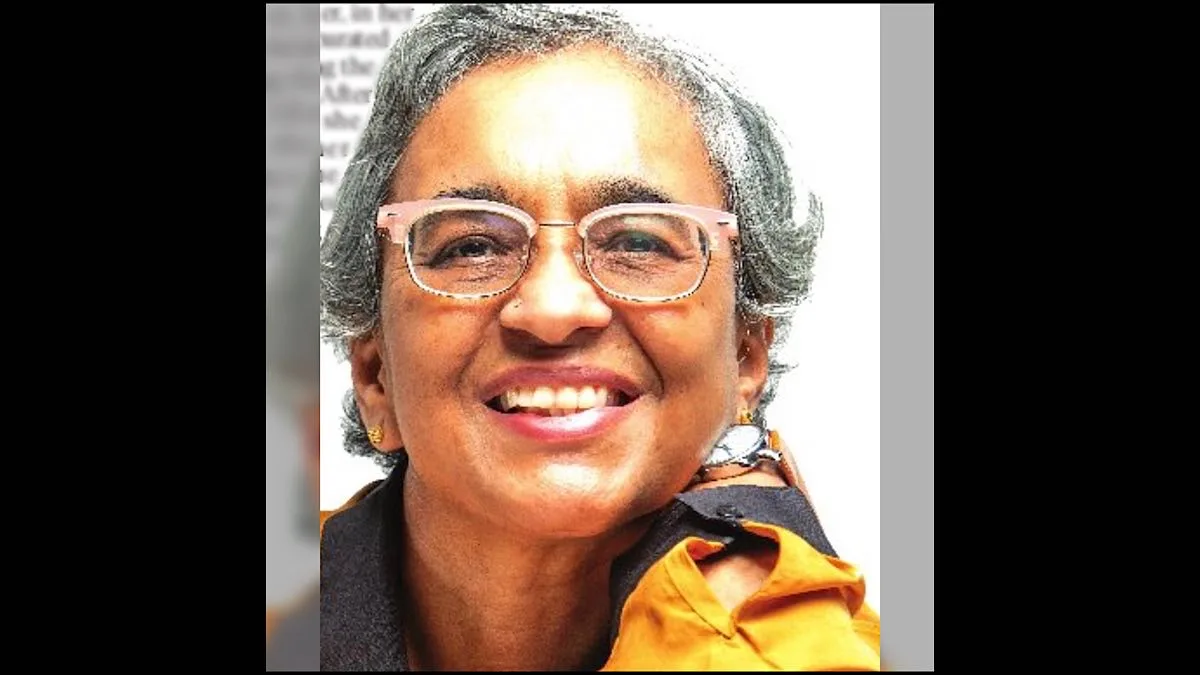
Photo:SNS
Jayanthi Sankar is an internationally award-winning author based in Singapore. Her fourth book, When Will You Die? is a novella that explores the depths of the human psyche. Her second novel, Tabula Rasa, was named a “Distinguished Favourite” in the 2022 NYC Big Book Award and received an Honourable Mention at the San Francisco Book Festival.
Her novel Misplaced Heads was a finalist in the 2020 Eyelands Book Awards (Greece), recognised as a remarkable work of postmodern historical fiction. Her short story collection Dangling Gandhi won the 2020 International Book Award (Fiction: Short Story) and also received the international Literary Titan Award.
Advertisement
What comes first for you, the plot or the characters? With a grand backdrop and strong protagonist, Misplaced Heads was more plot-driven, though its diverse characters unfolded naturally. Tabula Rasa, by contrast, leaned toward being character-driven. Certain characters from Tabula Rasa even inspired my recent socio-psychological novella, which in turn led to my current work-in-progress. I allow things to unfold organically rather than force them.
Advertisement
Do you identify with your main character?
I enjoy creating characters very different from myself, often exact opposite of myself. I want to live many lives through them, experiencing worlds and perspectives I don’t embody. My readers often remark on the diversity of my characters and the absence of the author. My fiction reflects Singapore and her people, where I have lived for over thirty-five years.
What themes are you interested in exploring in the future?
I hope to tell stories about the struggles of migrant workers—an integral part of Singapore’s fabric. Their lives, lived away from families with hopes for a better future, are complex, often heartbreaking. These stories may not take conventional fictional forms, but the character arcs will shape the narrative techniques and tools I use. What does being an author mean to you? Writing brings me joy and helps me evolve as a human being. For me, this process is more important than the label of “author,” which is only a by-product. I find happiness in inhabiting lives unlike my own, populating my fictional worlds, and in turn, better understanding the human psyche.
What do prizes and recognitions mean to you?
Recognition from international judges naturally carries weight. Awards encourage me to keep exploring and experimenting. I certainly don’t chase them. They bring visibility to my work. In today’s brand-driven world, they also enhance my credibility as a workshop facilitator and mentor, attracting more aspirants. Share one memorable experience from an international literary festival. At the APWT festival in Australia, I met two unpublished female writers. One, a former strip dancer, gave a heart-wrenching glimpse into the lives and struggles of women in her industry and later turned to academic research for her book. The other, in her seventies, had been separated from her family during the Japanese occupation. After researching her roots, she decided to write her story—something she had never planned to do. It was like conversing with “living books.” The interviewer is a freelance contributor
Advertisement